
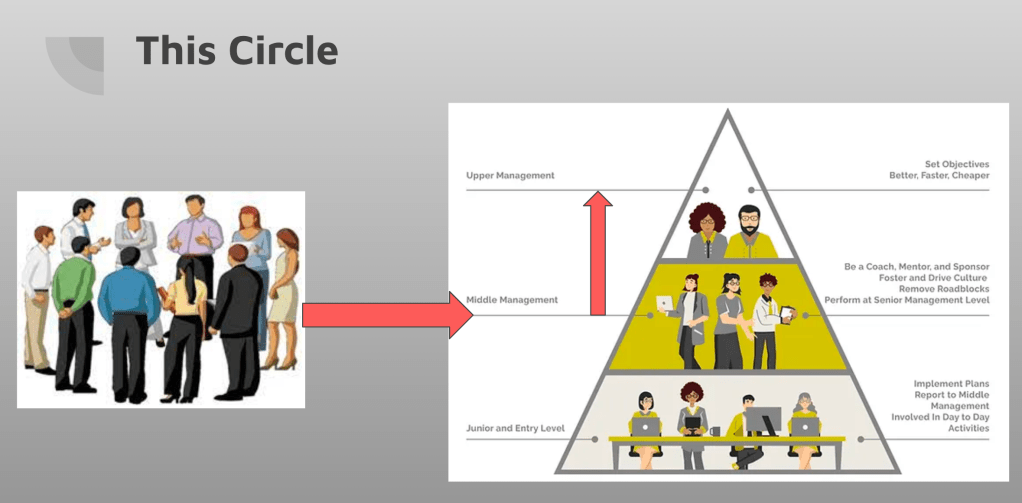
As a member of PlatoHQ (a startup that was focused on coaching and mentoring engineering leaders), I had the privilege to host a “Circle” – a series of chats, discussions on any particular management topic.
I chose “succeeding in middle management” – as I felt that most managers get stuck at this level or getting to this level – and are left frustrated trying to figure out what’s next for them or how to get better. Truth is that I would qualify myself as part of “middle management” and essentially this series of “Circles” was meant to share my journey and what worked and what did not as I navigated this part of my career.
I will at some point link to the deck I used .. but for now, I will share a series of question/answer style discussions (generated using NotebookLM and my deck).
Summary:
Outlining best practices and guidelines for growth in middle management. It explores common challenges faced by middle managers, such as limited upward mobility and navigating complex organizational dynamics. The presentation then offers a structured approach to career advancement, focusing on developing essential skills like communication, influence, and self-awareness, and leveraging various tools and resources for growth. Ultimately, the purpose is to equip middle managers with strategies and insights to overcome obstacles and achieve career progression.
Have you ever …
Asked yourself the following or thought along these lines?

What are the challenges of Middle Management?
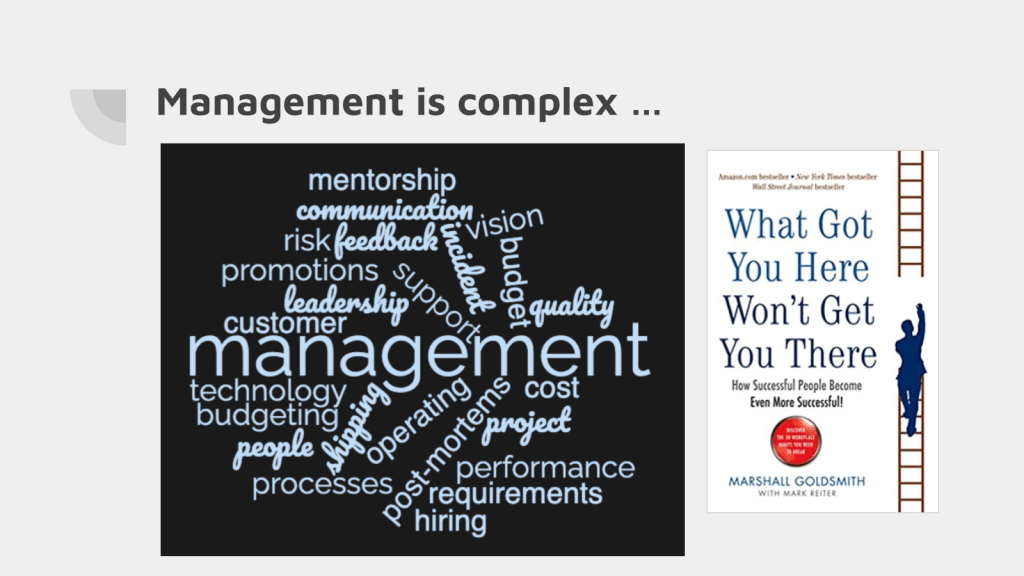
The following present and highlight the challenges faced by middle management and emphasize that successfully navigating these complexities requires a wide range of skills, adaptability, and continuous growth.
Navigating a political environment and dealing with feelings of frustration or inadequacy are common challenges. Middle managers may feel that the work environment is too political, or that upper management is incompetent. They may also experience frustration with their current role, their salary, or a perceived lack of opportunities for growth.
Managing diverse responsibilities and stakeholders effectively requires a complex set of skills. The responsibilities of a middle manager include managing people, budgets, technology, projects, and more. The skills required for success include vision, leadership, communication, and the ability to provide mentorship. Middle managers also need expertise in areas such as hiring, sourcing, performance reviews, and providing feedback.
The complexity of management contributes to low engagement among middle managers. A Gallup survey found that only 35% of managers are engaged at work. This can lead to feelings of stress, uncertainty, and setbacks, which middle managers need to learn to handle effectively.
Limited opportunities for advancement create challenges for ambitious managers. There is a limited number of jobs at the top, so not every middle manager who desires a promotion will receive one. Companies may also have a “flat” management structure, with few layers of management, further limiting advancement opportunities.
Adapting to different company cultures and expectations can be difficult. What works in one company or role may not be effective in another.
In addition to these challenges, middle managers must also be able to:
Think and act systematically. This requires seeing the big picture, broadening one’s perspective, and dealing with uncertainties and trade-offs.
Communicate effectively. Middle managers must be able to communicate with clarity to a variety of audiences, including superiors, peers, and subordinates. They must also be able to listen effectively and ask clarifying questions.
Build influence. In today’s flattened organizations, position or expertise alone does not guarantee influence. Middle managers must be able to gain cooperation and commitment from others to get things done.
Maintain learning agility. Middle managers must be able to learn and adapt quickly to changes in the workplace.
Develop strong self-awareness. Middle managers must understand their own strengths, weaknesses, and motivations to be effective leaders.
How can I influence those who matter?

(Image Source: https://primestrategies.co.nz/sphere-of-influence/)
Insights into how you can effectively influence your stakeholders and peers.
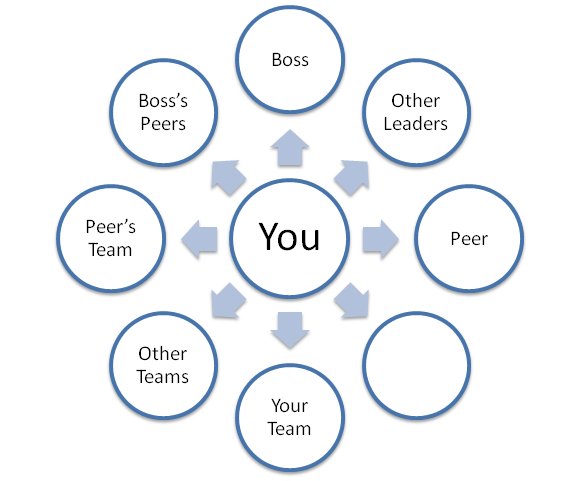
Understand your Sphere of Influence: The sources emphasize the concept of a “Sphere of Influence.” This is a visual representation of the people you can directly impact. Your sphere includes your team, your peers, your boss, and even your boss’s peers. While you might not have direct control over everyone in your organization, you can focus on building strong relationships and using effective communication strategies to influence those within your sphere.
Develop strong Middle Management skills: The sources highlight the importance of six core skills for leading from the middle which are crucial for successfully influencing others.
Think and Act Systematically: Influence often requires seeing beyond your immediate tasks and understanding the broader organizational context. This means considering how your actions and decisions affect others and align with overall goals.
Build Resilience: Setbacks and resistance are inevitable when trying to influence others. Developing resilience helps you navigate challenges, maintain equilibrium under pressure, and persevere in your efforts.
Master Communication: Effective communication is the bedrock of influence. This includes expressing your ideas clearly, actively listening to understand others’ perspectives, and adapting your communication style to different audiences.
Cultivate Influence: The sources emphasize that simply holding a position doesn’t equate to influence. You must actively cultivate it by mastering various influencing styles to gain commitment from people with diverse perspectives.
Embrace Learning Agility: Continuously learning and adapting is essential in today’s dynamic workplace. It allows you to stay relevant, solve problems effectively, and demonstrate your value to stakeholders and peers, thereby enhancing your influence.
Prioritize Self-Awareness: Understanding your own strengths, weaknesses, motivations, and communication style is crucial for successful influence. This self-knowledge helps you tailor your approach, build trust, and navigate interpersonal dynamics effectively.
Use “User Manuals” for Better Collaboration: The sources suggest creating “User Manuals” as a tool for improving communication and building stronger relationships. A User Manual outlines your preferred work style, communication preferences, and even potential triggers. By sharing this with your stakeholders and peers, you promote transparency and help them understand how to best work with you. This fosters mutual understanding and smoother collaboration, which are essential for building influence.
Manage Upwards Effectively: Influencing stakeholders often involves “managing upwards,” meaning proactively understanding and addressing your manager’s expectations and priorities. This involves clear communication, anticipating their needs, and avoiding surprises. By aligning your efforts with their goals and communication style, you can build trust and demonstrate your value, strengthening your influence.
Establish Alignment through Tools Like RACI: Tools like RACI (Responsible, Accountable, Consulted, Informed) charts can be valuable for clarifying roles and responsibilities on projects, ensuring everyone is aligned and working towards a shared understanding. This transparency and clarity contribute to smoother workflows and reduce potential for conflict, which can enhance your ability to influence outcomes.
By focusing on these strategies and continuously developing your leadership skills, you can effectively influence your stakeholders and peers, build stronger relationships, and contribute to a more positive and productive work environment.
Managing up
What does it mean to manage up? How can you “manage your boss”?
Managing up refers to proactively building a strong and positive working relationship with your manager. It involves understanding their work style, communication preferences, priorities, and expectations, and then adapting your own behavior to facilitate smoother collaboration and achieve shared goals. While it might seem counterintuitive to “manage” your boss, the sources emphasize that this approach is crucial for individual and team success.
Specific strategies for effectively managing your boss:
Understand What Drives Your Manager: This involves a deep dive into your manager’s perspective and motivations. You should ask yourself questions like:
- What does their manager expect from them? Understanding the pressures and expectations they face from above gives you valuable context.
- What are their top three priorities? Aligning your efforts with their key goals ensures your work contributes to what matters most to them.
- What are their pet peeves? Being aware of what irritates them allows you to avoid unnecessary friction and maintain a positive working relationship.
- What style of communication do they prefer? Adapting to their preferred mode (e.g., email, face-to-face meetings, concise updates, detailed reports) makes communication smoother and more effective.
- Do you need to go through their Executive Assistant? Understanding the communication protocols within their team helps ensure your messages reach them in a timely and appropriate manner.
Follow the “No Surprises” Rule: This principle is emphasized throughout the sources. It means keeping your manager informed about important developments, potential challenges, and proposed solutions. Avoiding surprises builds trust and allows them to provide support and guidance when needed.
By understanding and applying these strategies, you can cultivate a strong and productive relationship with your boss, enhancing your influence, contributing to team success, and fostering a more positive work environment.
How can you grow?

The sources provide valuable guidance on how to approach personal and professional growth, particularly for those in middle management roles. Here are some key steps you can take:
Define Your Concept of Growth: The sources prompt you to consider what “growth” means to you. This is an essential starting point because growth can encompass various aspects, including:
Career Advancement: This might involve moving up the corporate ladder to positions with greater responsibility, such as Director or Vice President.
Skill Development: Growth can also involve acquiring new skills, knowledge, and expertise in areas that interest you or are relevant to your current role and future aspirations.
Personal Development: This aspect of growth might involve enhancing your self-awareness, communication skills, resilience, or emotional intelligence.
Expanding Your Sphere of Influence: Growth can also manifest as increasing your impact and influence within your organization and beyond.
Embrace a Growth Mindset: The sources advocate for a proactive approach to growth, emphasizing the importance of “stepping forward into growth” rather than staying within your comfort zone. This involves:
Recognizing and Addressing Challenges: The sources acknowledge common challenges faced by middle managers, such as navigating office politics, managing complex responsibilities, and dealing with limited opportunities for advancement. To grow, you need to identify the specific challenges you face and seek solutions to overcome them.
Developing Essential Middle Management Skills: The sources outline six key skills for “leading from the middle” that are crucial for growth: Thinking and acting systematically, resiliency, communication, influence, learning agility, and self-awareness.
Seeking Continuous Learning Opportunities: The sources stress the importance of remaining a lifelong learner, staying updated with industry trends, and actively seeking opportunities to expand your knowledge and skillset.
Set SMART Goals: The sources highlight the importance of goal setting, suggesting the use of “BHAGs” (Big Hairy Audacious Goals) as a way to inspire ambitious aspirations. You can apply the SMART (Specific, Measurable, Achievable, Relevant, Time-bound) framework to define goals that are clear, actionable, and motivating. These goals could focus on:
Specific skills you want to develop: For example, you might aim to improve your public speaking skills, master a new technology, or become more proficient in a specific management technique.
Expanding your responsibilities: This might involve seeking opportunities to lead larger projects, manage larger teams, or take on a broader range of tasks within your current role.
Building stronger relationships: You might set goals to improve your communication with specific stakeholders, build a stronger rapport with your manager, or expand your professional network.
Leverage Available Resources: The sources emphasize the importance of actively seeking support for growth. This could include:
Seeking mentorship or coaching: Finding a mentor or coach who can provide guidance, share their experiences, and offer feedback is invaluable for growth.
Joining professional organizations or networking groups: These platforms offer opportunities to connect with peers, learn from industry experts, and stay abreast of new developments in your field.
Taking advantage of available training programs and resources: Many companies offer internal training programs or provide access to online learning platforms to support employee development.
By taking these steps and committing to a continuous growth mindset, you can enhance your career prospects, expand your skillset, and achieve your professional goals.
In conclusion
There is no end to learning. Management is an art. The set of strategies above were more of a discussion item as I managed the hosted “Circle” at PlatoHQ. the value was not in the bullet point strategies presented but in the conversations around these points – how these panned out in the real world – what worked and what didn’t.
I hope to connect and remain connected with those that are in a similar journey as we keep the conversation going!

 Engineering Leadership in the Data + AI Domain
Leave a comment